




One of the most common questions we’re asked at Macs Adventure is: “How fit do I need to be to walk the Camino?”
The short answer? You don’t need to be an athlete - but you do need to be prepared.
The Camino de Santiago is a journey of steady, consecutive walking days. Most routes involve walking between 7–25 km (4–15 miles) per day, often for a week or more. Terrain, elevation and daily distances vary depending on the route you choose, so your required fitness level will too.
Below, we break down how fit you need to be for each of the most popular Camino routes - plus practical training advice and guidance for cyclists.

What Does “Camino Fitness” Actually Mean?
Walking the Camino isn’t about speed. It’s about:
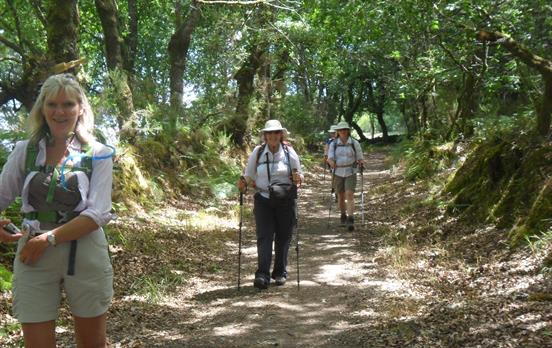
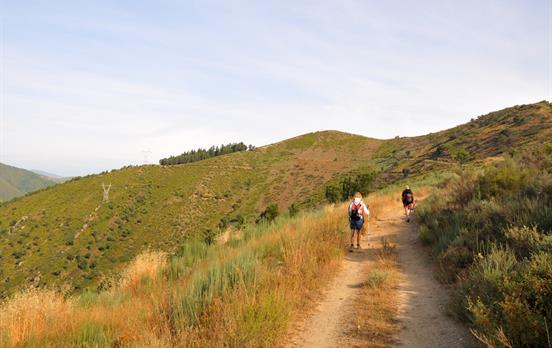
- Being comfortable walking 4–8 hours a day
- Managing back-to-back walking days
- Handling hills and uneven terrain
- Recovering well overnight
You don’t need marathon endurance - but you should be able to walk confidently for several hours without discomfort.
If you can currently walk 6–9 miles (10–15 km) in a day and feel good the next morning, you’re likely on the right track for many Camino routes.

How Fit Do I Need to Be? Route by Route
Camino Francés
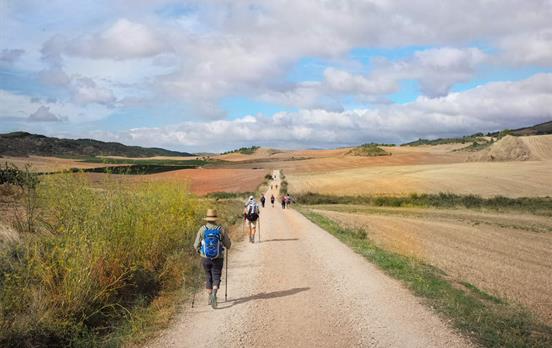
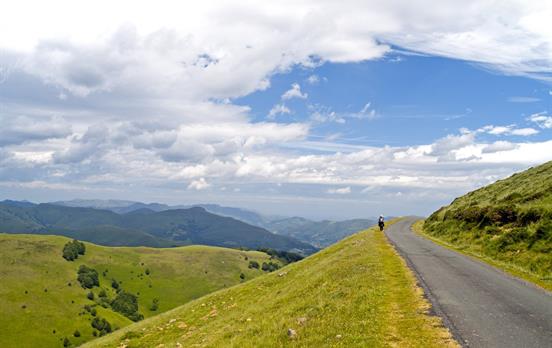
The Camino Francés is the most popular and well-supported route. Terrain is varied but generally manageable, with rolling countryside, long gravel tracks and a few notable climbs (such as the Pyrenees crossing from St Jean Pied de Port and the ascent to O Cebreiro).
- Fitness level: Moderate
- Daily distance: 15–25 km (9–15 miles)
- Terrain: Mix of flat paths, farmland tracks and some long, gradual climbs
- Best for: First-time pilgrims with a reasonable walking base
The full Camino Francés stretches around 790 km (500 miles) from St Jean Pied de Port to Santiago and typically takes 4–6 weeks to complete in one go. However, many walkers choose to tackle it in shorter stages - walking one section at a time over several years. Starting from Sarria (the final 100 km) is also a popular option for those wanting a shorter Camino experience.
Check out our Camino Frances itineraries >

Camino del Norte
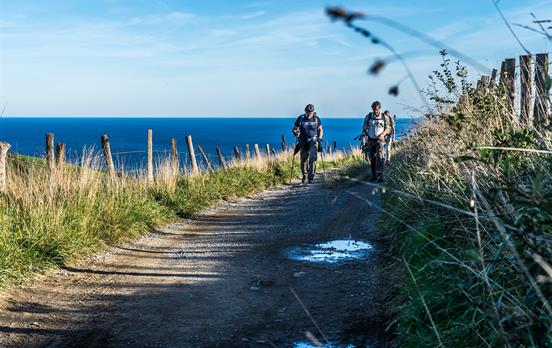
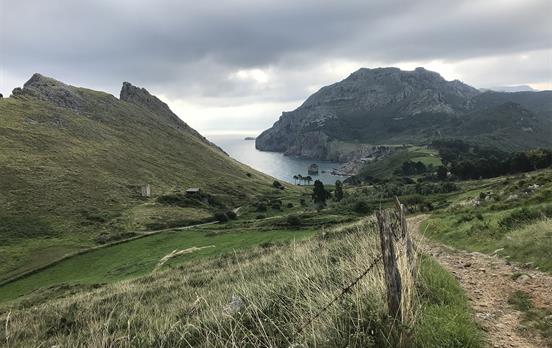
The Camino del Norte follows Spain’s northern coastline and includes frequent ascents and descents.
- Fitness level: Moderate to Challenging
- Daily distance: 18–25 km (11–15 miles)
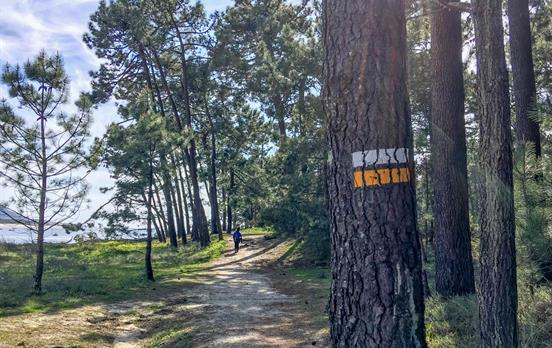
- Terrain: Coastal hills, woodland paths, uneven surfaces
- Best for: Walkers comfortable with hills and sustained elevation changes
The full Camino del Norte covers approximately 825 km (513 miles) from Irun to Santiago and usually takes around 5–6 weeks to complete. Due to its length and physical demands, many pilgrims prefer to walk it in sections, breaking it into manageable stages over multiple trips.
Check out our Camino del Norte itineraries >

Camino Inglés
Shorter in overall distance but with some rolling terrain, the Camino Inglés is achievable for walkers with moderate fitness.
- Fitness level: Moderate
- Daily distance: 12–20 km (7–12 miles)
- Terrain: Rolling countryside, some hills
- Best for: Those short on time who can handle a few steady climbs
Because it’s compact (typically 5–7 days), it suits walkers who can manage consistent mid-range daily distances.
Check out our Camino Ingles itinerary >

Camino Primitivo
The Camino Primitivo is widely regarded as the most physically demanding Camino.
- Fitness level: Challenging
- Daily distance: 15–25 km (9–15 miles)
- Terrain: Mountainous, steep ascents and descents, remote sections
- Best for: Experienced hikers with strong hill fitness
This route requires confidence in rugged terrain and the ability to handle sustained climbs.
Check out our Camino Primitivo itinerary >

Camino Portuguese Central Way
Starting in Porto, this route is generally gentler than the northern Spanish routes.
- Fitness level: Moderate
- Daily distance: 15–22 km (9–14 miles)
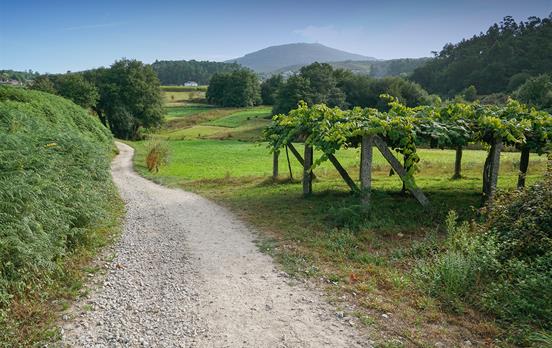
- Terrain: Rural tracks, vineyard paths, moderate hills
- Best for: Walkers seeking a balanced challenge
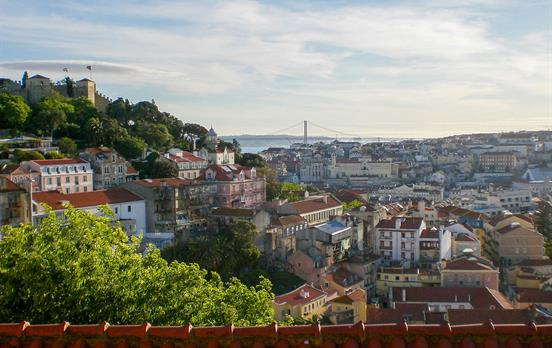
The full Camino Portugués Central from Lisbon is around 610 km (380 miles), while the popular Porto to Santiago section is approximately 240 km (150 miles). The entire route can be completed in one journey, but it also works extremely well when divided into shorter stages - making it a flexible option for those with limited time.
Check out our Camino Portuguese Central Way itineraries >

Camino Portuguese Coastal Way
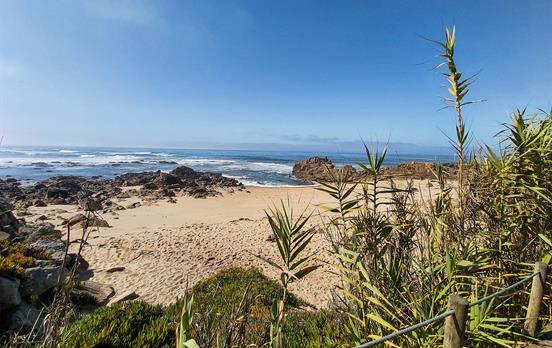
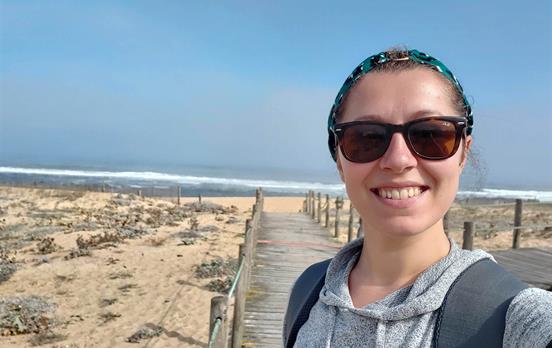
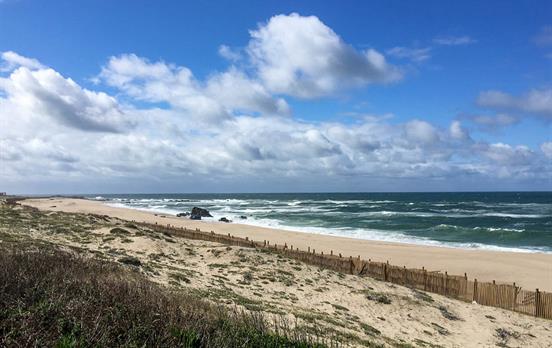
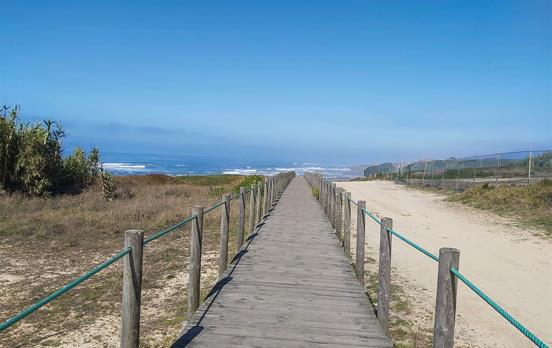
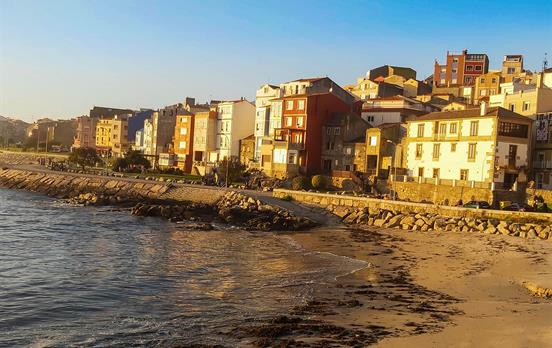
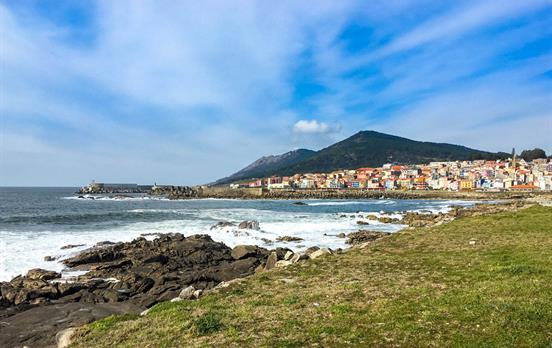
The Coastal Way follows boardwalks, sandy paths and seaside promenades, offering a scenic alternative to the inland Central route.
- Fitness level: Moderate
- Daily distance: 15–23 km (9–14 miles)
- Terrain: Coastal paths, some sandy stretches, generally gentler gradients
- Best for: Walkers wanting scenic, less mountainous terrain
From Porto to Santiago, the Coastal Way is roughly 280 km (174 miles) and can be walked in around two weeks. Like other Camino routes, it can be completed in full or enjoyed in shorter sections - ideal if you prefer to spread the experience over multiple trips.
Check out our Portuguese Coastal Way itineraries >

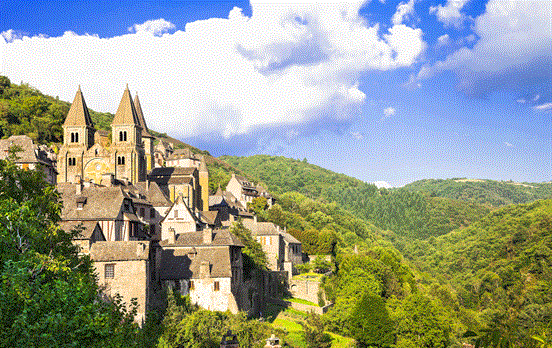
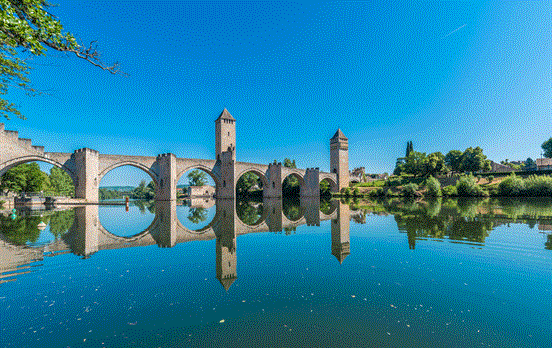
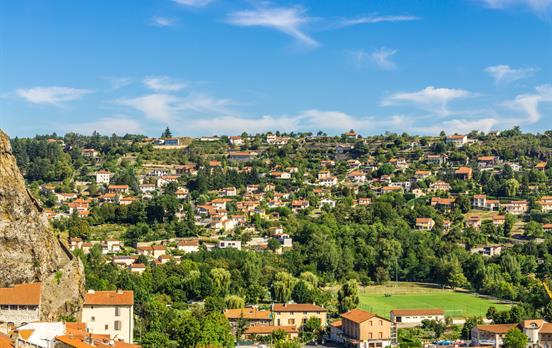
Camino Le Puy (Via Podiensis)
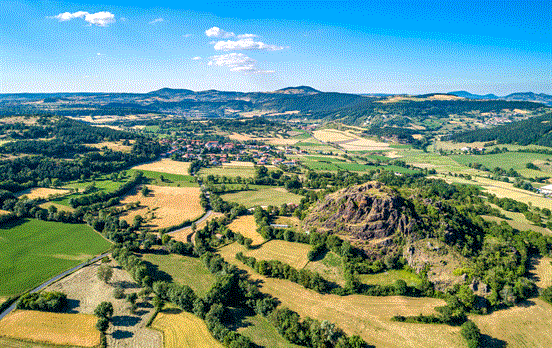
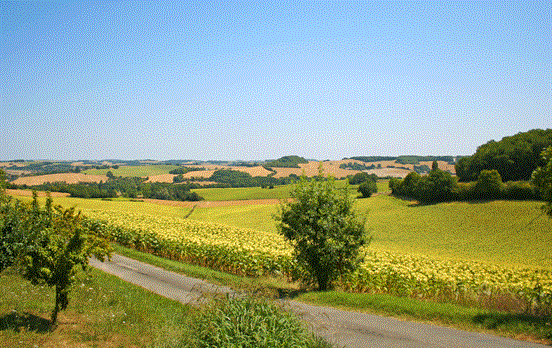
Beginning in Le Puy-en-Velay, this French route features rolling countryside, volcanic plateaus and rural landscapes.
- Fitness level: Moderate to Challenging
- Daily distance: 18–25 km (11–15 miles)
- Terrain: Frequent climbs, rural tracks, open landscapes
- Best for: Walkers comfortable with sustained daily elevation gain
The full Camino Le Puy stretches approximately 750 km (465 miles) to St Jean Pied de Port and takes around 4–6 weeks to complete. It’s very commonly walked in stages, with many pilgrims completing one section per year. This flexibility makes it a rewarding long-term journey as well as a single extended adventure.
Check out our Camino Le Puy itineraries >

Camino Finisterre
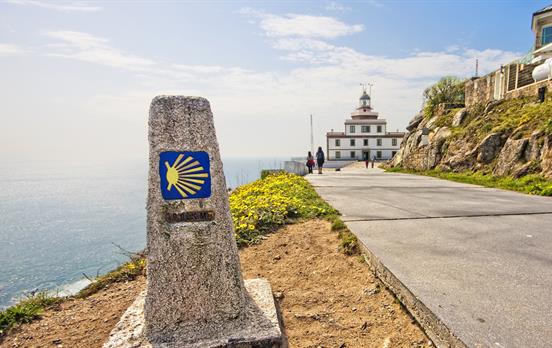
Often walked after reaching Santiago, the Camino Finisterre continues to the Atlantic coast.
- Fitness level: Moderate
- Daily distance: 15–25 km (9–15 miles)
- Terrain: Rolling hills, forest paths, coastal sections
- Best for: Pilgrims with energy left after Santiago
Shorter overall but includes notable climbs early on.
Check out our Camino Finisterre itinerary >

Fitness Advice Before You Go
- Walk at least 3 times per week for 8–12 weeks before departure
- Include one longer walk weekly (building up to 15–20 km)
- Try walking two or three days in a row during training to mimic the consecutive walking days you’ll encounter on the Camino
- Even “easier” routes include elevation. Incorporate hills or stair climbing into your preparation.
- Break in footwear well before departure. Blisters are more common than exhaustion.
- Add strength training for legs and core
- Stretch regularly to prevent stiffness
- Focus on recovery - sleep and hydration matter
- Practise walking for several hours in the gear you’re going to wear, including your backpack with all the water you’ll need for the day (usually min 2L)
- And make sure your backpack is big enough, but not too big, as you’ll always fill it!
Remember: consistency matters more than intensity.

Cycling Fitness: Bike the Camino Portuguese Coastal Way
If you’re cycling our Bike the Camino Portuguese Coastal Way, fitness requirements shift slightly.
- Fitness level: Moderate cycling fitness
- Daily distance: Typically, 35–60 km (22–37 miles)
- Terrain: Coastal roads, bike paths, some rolling hills
- Surface: Mix of paved roads, cycle tracks and occasional gravel
You don’t need to be a competitive cyclist - but you should be comfortable cycling for 3–5 hours per day.
Cycling Preparation Tips
- Ride 2–3 times per week for at least 6 weeks beforehand
- Build up to back-to-back riding days
- Practice moderate hills
- Get comfortable riding in varied weather conditions
- Consider padded cycling shorts for comfort
E-bikes are an excellent option for those wanting to reduce physical strain while still enjoying the full Camino experience.

Can Seniors Walk the Camino?
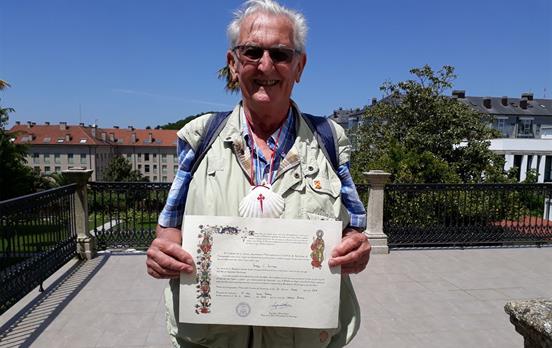
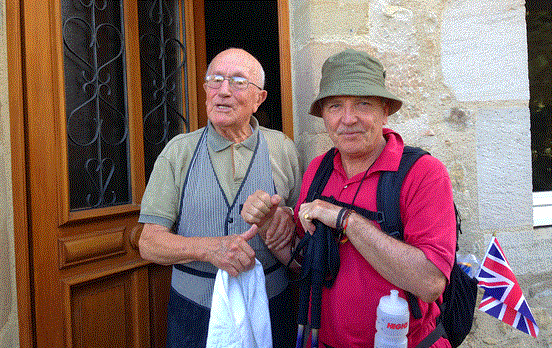
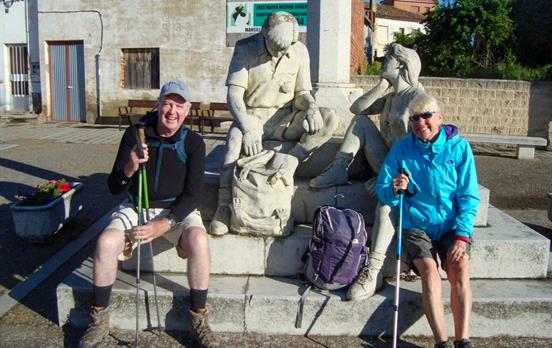
Absolutely. Many of our travellers are in their 60s and 70s. Fitness matters more than age. With the right preparation - and by choosing the right route or relaxed itinerary - the Camino is achievable for many active adults. Many seniors have experience as an asset, and often walk at a much steadier pace, allowing larger distances to be covered.
At Macs Adventure, we also offer relaxed Camino itineraries with shorter daily distances (7–22 km / 4–14 miles), allowing more time to rest, explore and absorb the experience.
Explore our Relaxed Camino itinerary >

Final Thoughts: It’s About Endurance, Not Speed
You don’t need elite fitness to walk the Camino - but you do need preparation, resilience and realistic expectations.
Choose the route that matches your current ability. Train consistently. Pace yourself. And remember: the Camino is not a race.
With the right preparation and the right itinerary, most reasonably active people can complete a Camino route - and enjoy every step of the journey.

Why Walk the Camino Today?
Because few journeys offer this blend of history, culture, challenge, and connection.
The Camino strips life back to essentials: walking, eating, resting, and moving forward. It invites conversation, reflection, and unexpected friendships. And it offers something rare - time to think, and space to simply be.
Whether walked for faith, curiosity, healing, or adventure, the Camino leaves its mark long after the final step.
Why Choose Macs Adventure for Your Camino Journey?
Planning a Camino should feel exciting, not overwhelming. With Macs Adventure, everything is taken care of so you can focus on the experience itself.
- Carefully chosen accommodation with daily breakfasts
- Hand-picked accommodation
- Daily luggage transfers
- Detailed route info and navigation support via our award-winning app
- 24/7 emergency assistance
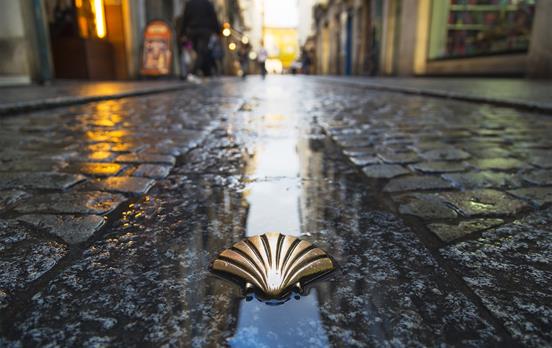
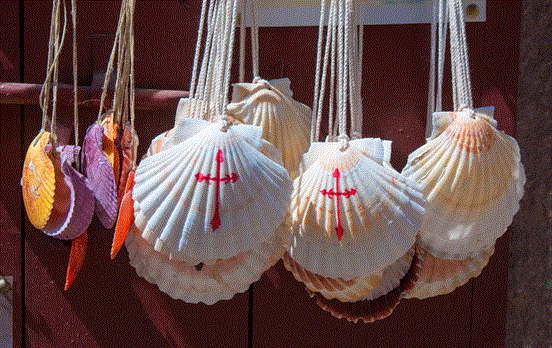
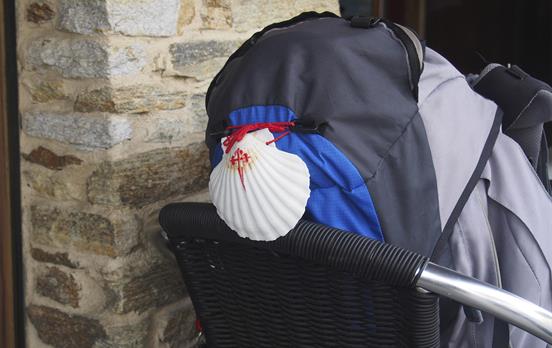
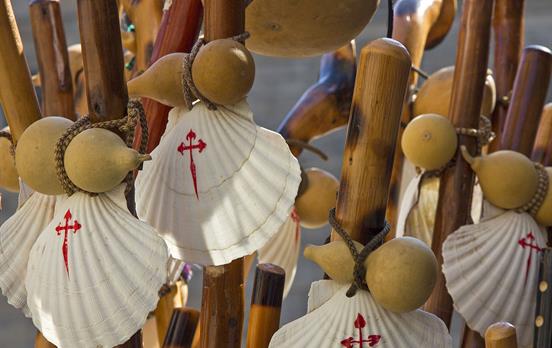
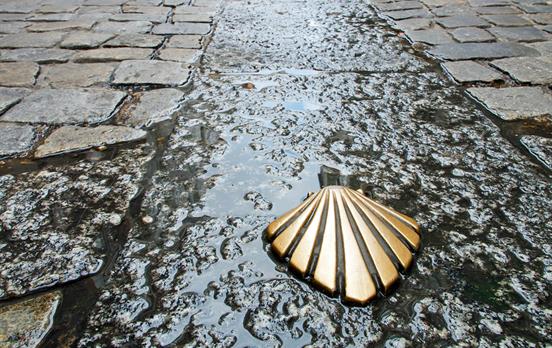
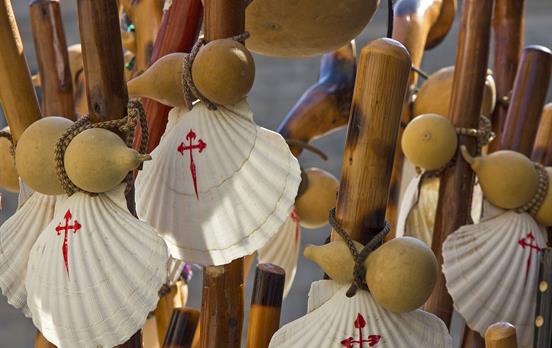
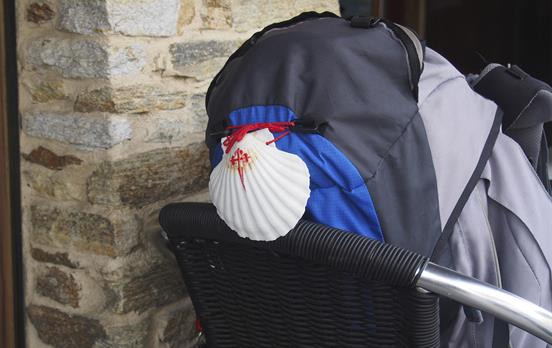
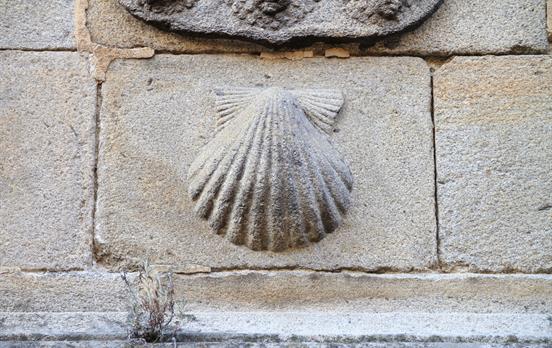
- Pilgrim passport and Camino shell included
All that’s left for you to do is follow the trail-and enjoy every step.

People Also Ask
- Ultimate Guide to the Camino de Santiago
Everything you need to know about routes, planning, and what to expect.
Read the ultimate Camino guide >
- What is a Camino?
A Camino is a long-distance pilgrimage journey, traditionally walked (or cycled), that follows historic routes leading to Santiago de Compostela in northwest Spain.
Learn more about the History of the Camino >
- Which Camino Is Right for Me?
Compare routes and find the Camino that best suits your pace, interests, and experience.
Find your Camino >
- What Should I Pack for My Camino Trip?
From footwear to essentials, pack smart and walk comfortably.
See the Camino packing list >
- Tips for Travelling to and From the Camino
Practical advice on flights, transfers, and route logistics.
Plan your journey >
- Essential Camino Phrases
Helpful Spanish phrases for pilgrims along the way.
Learn Camino phrases >
- Camino FAQs
Clear answers to the most common Camino questions.
Read Camino FAQs >





















 Australia
 New Zealand
 South Africa
 European Union